Hanzi Writer

How to Write 锷 (è)

锷 (è) means "blade edge (of a sword)" in Chinese. It has 14 strokes with the radical 钅. Difficulty: 4.2/5.

è
14 strokes Radical: 钅 Difficulty: 4.2/5

blade edge (of a sword)

How to Write 锷

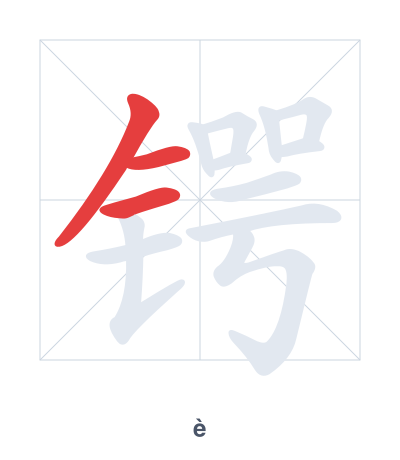
The character (è) is written with 14 strokes. Follow the standard Chinese stroke order: top to bottom, left to right, outside before inside. The radical is one of its key components.

Practice the correct stroke order with the Hanzi Writer app to see animated stroke-by-stroke guidance with real-time feedback.

Meaning & Pronunciation

is pronounced è in Mandarin Chinese. It means blade edge (of a sword).

Common Words with 锷

剑锷 jiàn è
Sword edge / Crossguard
锋锷 fēng è
Edge of a sword or blade
锷部 è bù
the blade/edge part

Example Sentences

这把剑的剑锷很美。

zhè bǎ jiàn de jiàn è hěn měi

The crossguard of this sword is very beautiful.

他的笔锋很有锋锷。

tā de bǐ fēng hěn yǒu fēng è

His writing style is very sharp.

检查一下剑的锷部。

jiǎn chá yī xià jiàn de è bù

Check the handguard of the sword.

Similar Characters

máng
zhù
láo
Stroke order practice for 锷 - è

Practice Writing 锷 (è)

Open Hanzi Writer to see the animated stroke order and practice writing 锷 with real-time feedback.

Frequently Asked Questions about 锷

Related Characters