棕 (zōng) means "brown; palm" in Chinese. It has 12 strokes with the radical 木.
Rated 4.2/5 in difficulty (advanced).
Appears in 3+ common words including 棕色 (zōng sè), 棕榈树 (zōng lǘ shù), 棕熊 (zōng xióng).
Due to its 12 strokes, Hanzi Writer's error detection shows 棕 requires focused practice — most learners need 10+ attempts for consistent accuracy.
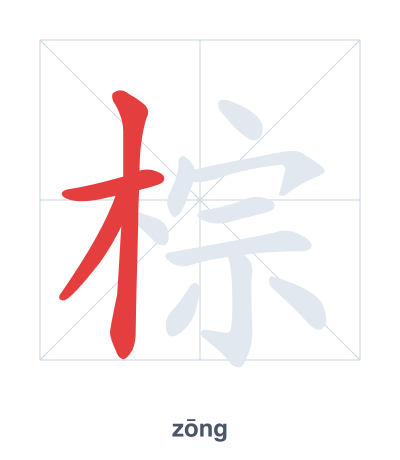
Open Hanzi Writer to see the animated stroke order and practice writing 棕 with real-time feedback.
The character 棕 (zōng) is written with 12 strokes. Follow the standard Chinese stroke order: top to bottom, left to right, outside before inside. The radical 木 is one of its key components.
Practice the correct stroke order with the Hanzi Writer app to see animated stroke-by-stroke guidance with real-time feedback.
棕 means brown; palm.
棕 is a phono-semantic compound where 木 (tree) indicates the palm tree, and 宗 (zōng) provides the pronunciation. The palm tree's fibrous bark was historically used to make brown-colored materials like ropes and brushes, so the character also came to represent the color brown.
💡 Memory Tip: Imagine a palm tree (木) with a brown trunk and leaves that spell out 宗, reminding you that 棕 means both palm and brown.
我买了一件棕色的毛衣。
wǒ mǎi le yī jiàn zōng sè de máo yī
I bought a brown sweater.
海边有很多棕榈树。
hǎi biān yǒu hěn duō zōng lǘ shù
There are many palm trees by the sea.
动物园里有一只大棕熊。
dòng wù yuán lǐ yǒu yī zhī dà zōng xióng
There is a big brown bear in the zoo.
Open Hanzi Writer to see the animated stroke order and practice writing 棕 with real-time feedback.
✨ Animated stroke order · Handwriting recognition · HSK-graded practice · Free to use
棕 is a phono-semantic compound. The left radical 木 means 'tree', and the right part 宗 (zōng) provides the sound. Together, they form a character for 'palm tree', and the color brown comes from the brown fibers of the palm.