锱 (zī) means "ancient unit of weight (very small)" in Chinese. It has 13 strokes with the radical 钅.
Rated 4.2/5 in difficulty (advanced).
Appears in 3+ common words including 锱铢 (zī zhū), 锱铢必较 (zī zhū bì jiào), 锱介 (zī jiè).
Due to its 13 strokes, Hanzi Writer's error detection shows 锱 requires focused practice — most learners need 10+ attempts for consistent accuracy.
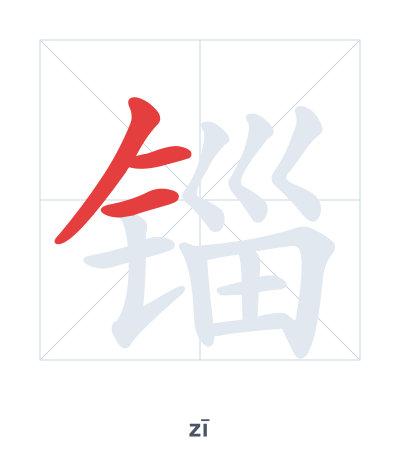
Open Hanzi Writer to see the animated stroke order and practice writing 锱 with real-time feedback.
The character 锱 (zī) is written with 13 strokes. Follow the standard Chinese stroke order: top to bottom, left to right, outside before inside. The radical 钅 is one of its key components.
Practice the correct stroke order with the Hanzi Writer app to see animated stroke-by-stroke guidance with real-time feedback.
锱 means ancient unit of weight (very small).
锱 is a phono-semantic compound. The radical 钅 (gold/metal) hints at its use as a weight measure for precious metals, while the phonetic component 甾 (zī) provides the sound. This character refers to an ancient unit of weight, about 1/24 of a liang, emphasizing a very small quantity.
💡 Memory Tip: Imagine a tiny golden (钅) weight shaped like a zigzag '甾' that's so small it gets lost between two grains of rice.
锱铢是古代单位。
zī zhū shì gǔ dài dān wèi
Zizhu are ancient units of weight.
他买菜锱铢必较。
tā mǎi cài zī zhū bì jiào
He haggles over every penny when buying groceries.
他为人很锱介。
tā wéi rén hěn zī jiè
He is very scrupulous about small details.
Open Hanzi Writer to see the animated stroke order and practice writing 锱 with real-time feedback.
✨ Animated stroke order · Handwriting recognition · HSK-graded practice · Free to use
The left side is 钅 (jīn), the metal radical, indicating that this character is related to metal. The right side is 资 (zī), which gives the pronunciation and originally meant 'money' or 'resources'. Together, they show a small metal weight used in ancient times to measure money.