粢 (zī) means "common millet; grain" in Chinese. It has 12 strokes with the radical 米.
Rated 4.2/5 in difficulty (advanced).
Appears in 3+ common words including 粢饭 (zī fàn), 粢粑 (zī bā), 粢盛 (zī shèng).
Due to its 12 strokes, Hanzi Writer's error detection shows 粢 requires focused practice — most learners need 10+ attempts for consistent accuracy.
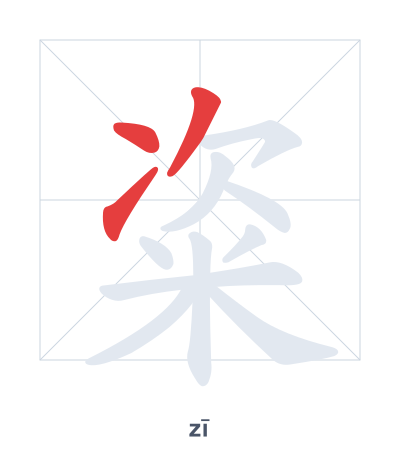
Open Hanzi Writer to see the animated stroke order and practice writing 粢 with real-time feedback.
The character 粢 (zī) is written with 12 strokes. Follow the standard Chinese stroke order: top to bottom, left to right, outside before inside. The radical 米 is one of its key components.
Practice the correct stroke order with the Hanzi Writer app to see animated stroke-by-stroke guidance with real-time feedback.
粢 means common millet; grain.
粢 is a phono-semantic compound: the radical 米 (rice/grain) indicates its meaning as common millet or grain, while the component 次 (cì) provides the approximate pronunciation. In ancient China, this character specifically referred to the millet used for ritual offerings, linking the grain radical to ceremonial use.
💡 Memory Tip: Picture a pile of grain (米) that's 'second' in line (次) because it's ordinary millet, not the premium rice.
我早餐喜欢吃粢饭团。
wǒ zǎo cān xǐ huān chī zī fàn tuán
I like eating sticky rice rolls for breakfast.
这种粢粑的味道很甜。
zhè zhǒng zī bā de wèi dào hěn tián
This glutinous rice cake tastes very sweet.
粢盛是古代祭祀用的谷物。
zī shèng shì gǔ dài jì sì yòng de gǔ wù
'Zicheng' refers to the grains used in ancient sacrifices.
Open Hanzi Writer to see the animated stroke order and practice writing 粢 with real-time feedback.
✨ Animated stroke order · Handwriting recognition · HSK-graded practice · Free to use
粢 is made of two parts: the top is 次 (cì, meaning "order" or "next") and the bottom is 米 (mǐ, meaning "rice"). The 米 radical shows it is a type of grain, while 次 gives a clue to its pronunciation "zī".