Hanzi Writer

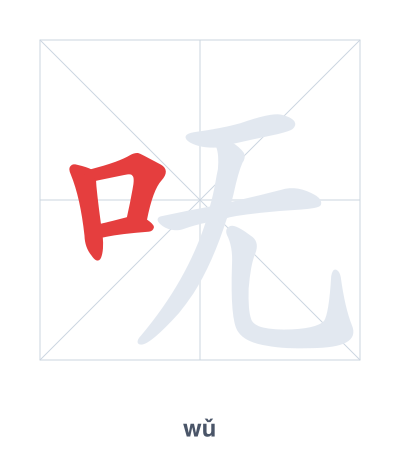
How to Write 呒 (wǔ)

呒 (wǔ) means "not / have not (dialect)" in Chinese. It has 7 strokes with the radical 口. Difficulty: 3.5/5.

7 strokes Radical: 口 Difficulty: 3.5/5

not / have not (dialect)

How to Write 呒

The character (wǔ) is written with 7 strokes. Follow the standard Chinese stroke order: top to bottom, left to right, outside before inside. The radical is one of its key components.

Practice the correct stroke order with the Hanzi Writer app to see animated stroke-by-stroke guidance with real-time feedback.

Meaning & Pronunciation

is pronounced in Mandarin Chinese. It means not / have not (dialect).

Common Words with 呒

呒没 wǔ méi
not have / none (dialect)
呒啥 wǔ shá
nothing / it's nothing (dialect)
呒奈 wǔ nài
helpless / no way out (dialect)

Example Sentences

他呒没钱。

tā wǔ méi qián

He has no money.

这件事呒啥。

zhè jiàn shì wǔ shá

This matter is nothing.

他感到很呒奈。

tā gǎn dào hěn wǔ nài

He felt very helpless.

Similar Characters

gōu
Stroke order practice for 呒 - wǔ

Practice Writing 呒 (wǔ)

Open Hanzi Writer to see the animated stroke order and practice writing 呒 with real-time feedback.

Frequently Asked Questions about 呒

Related Characters