Hanzi Writer

How to Write 颧 (quán)

颧 (quán) means "Cheekbone" in Chinese. It has 23 strokes with the radical 页. Difficulty: 3.8/5.

quán
23 strokes Radical: 页 Difficulty: 3.8/5

Cheekbone

How to Write 颧

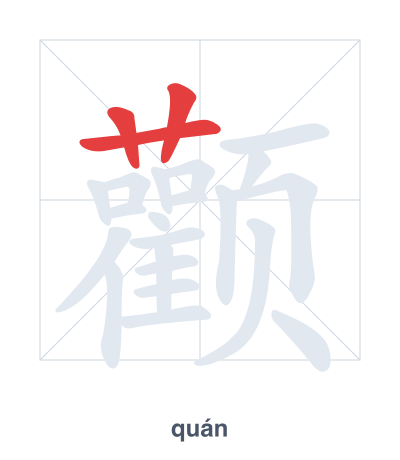
The character (quán) is written with 23 strokes. Follow the standard Chinese stroke order: top to bottom, left to right, outside before inside. The radical is one of its key components.

Practice the correct stroke order with the Hanzi Writer app to see animated stroke-by-stroke guidance with real-time feedback.

Meaning & Pronunciation

is pronounced quán in Mandarin Chinese. It means Cheekbone.

Common Words with 颧

颧骨 quán gǔ
Cheekbone
高颧骨 gāo quán gǔ
high cheekbones
颧部 quán bù
Cheek area; zygomatic region

Example Sentences

他的颧骨很高。

tā de quán gǔ hěn gāo

He has high cheekbones.

她长着高颧骨。

tā zhǎng zhe gāo quán gǔ

She has high cheekbones.

医生检查了他的颧部。

yī shēng jiǎn chá le tā de quán bù

The doctor examined his cheekbone area.

Stroke order practice for 颧 - quán

Practice Writing 颧 (quán)

Open Hanzi Writer to see the animated stroke order and practice writing 颧 with real-time feedback.

Frequently Asked Questions about 颧

Related Characters