Hanzi Writer

How to Write 弭 (mǐ) — Meaning “To stop; to put an end to.”

9 strokes Radical: 弓

弭 (mǐ) means "To stop; to put an end to." in Chinese. It has 9 strokes with the radical 弓.

Rated 4/5 in difficulty (challenging).

Appears in 3+ common words including 消弭 (xiāo mǐ), 弭平 (mǐ píng), 弭患 (mǐ huàn).

Due to its 9 strokes, Hanzi Writer's error detection shows 弭 requires focused practice — most learners need 10+ attempts for consistent accuracy.
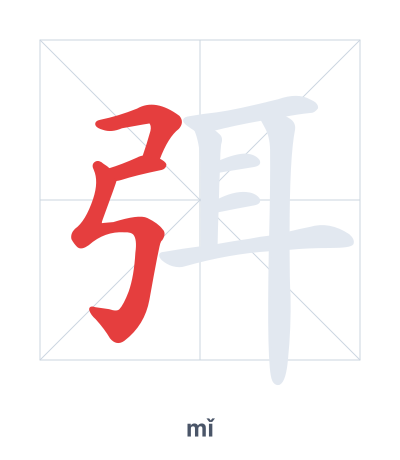
Stroke order practice for 弭 - mǐ

Practice Writing 弭 (mǐ)

Open Hanzi Writer to see the animated stroke order and practice writing 弭 with real-time feedback.

The character (mǐ) is written with 9 strokes. Follow the standard Chinese stroke order: top to bottom, left to right, outside before inside. The radical is one of its key components.

Practice the correct stroke order with the Hanzi Writer app to see animated stroke-by-stroke guidance with real-time feedback.

means To stop; to put an end to..

Character
Pinyinmǐ (mi)
MeaningTo stop; to put an end to.
Strokes9
Radical
Difficulty4/5

弭 originally depicted a bow (弓) with a jade ear-shaped ornament (耳) attached to the end of the bowstring to stop its vibration, thus extending to the meaning 'to put an end to.'

💡 Memory Tip: Imagine a bow (弓) with a giant ear (耳) on it; when the bow twangs, the ear hears it so loudly that you must stop (弭) the noise immediately.

xiāo mǐ
to eliminate; to put an end to
mǐ píng
To quell; to settle; to put down.
mǐ huàn
To eliminate trouble; to prevent disaster.

消弭彼此的误会。

xiāo mǐ bǐ cǐ de wù huì

To eliminate misunderstandings between each other.

弭平了这场争端。

mǐ píng le zhè chǎng zhēng duān

Settled this dispute.

弭患于未然。

mǐ huàn yú wèi rán

To nip trouble in the bud.

Character Pinyin Strokes Radical
(current) 9
7
zhāng 7
8
Stroke order practice for 弭 - mǐ

Practice Writing 弭 (mǐ)

Open Hanzi Writer to see the animated stroke order and practice writing 弭 with real-time feedback.

✨ Animated stroke order · Handwriting recognition · HSK-graded practice · Free to use

Frequently Asked Questions about 弭

弭 is composed of the radical 弓 (bow) on the left and the phonetic component 耳 (ear) on the right. The bow suggests the action of stopping or releasing an arrow, which connects to the meaning "to stop" or "to put an end to." The ear component primarily provides the sound mǐ, but also hints at listening to quell a disturbance.

Characters with Radical 弓

Other 9-Stroke Characters