濠 (háo) means "Moat; trench" in Chinese. It has 17 strokes with the radical 氵.
Rated 4.2/5 in difficulty (advanced).
Appears in 3+ common words including 濠沟 (háo gōu), 濠梁 (háo liáng), 濠水 (háo shuǐ).
Due to its 17 strokes, Hanzi Writer's error detection shows 濠 requires focused practice — most learners need 10+ attempts for consistent accuracy.
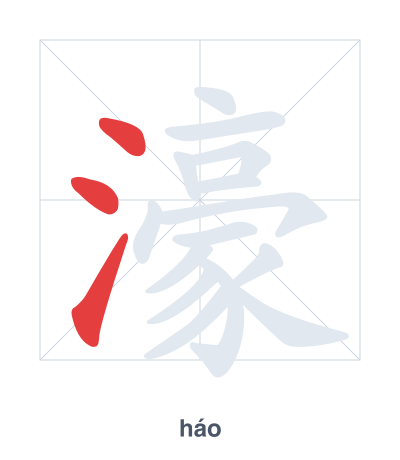
Open Hanzi Writer to see the animated stroke order and practice writing 濠 with real-time feedback.
The character 濠 (háo) is written with 17 strokes. Follow the standard Chinese stroke order: top to bottom, left to right, outside before inside. The radical 氵 is one of its key components.
Practice the correct stroke order with the Hanzi Writer app to see animated stroke-by-stroke guidance with real-time feedback.
濠 means Moat; trench.
濠 is a phono-semantic compound. The radical 氵 (water) indicates its connection to bodies of water, while 豪 (háo, meaning 'hero' or 'grand') provides the pronunciation and hints at the large, impressive scale of a defensive moat around a city or fortress.
💡 Memory Tip: Picture a grand hero (豪) standing guard beside a water-filled moat (氵), ready to defend the castle.
门前有一条濠沟。
mén qián yǒu yī tiáo háo gōu
There is a ditch in front of the door.
他在濠梁上看鱼。
tā zài háo liáng shàng kàn yú
He is watching fish from the bridge over the moat.
濠水流向了远方。
háo shuǐ liú xiàng le yuǎn fāng
The Hao River flows into the distance.
Open Hanzi Writer to see the animated stroke order and practice writing 濠 with real-time feedback.
✨ Animated stroke order · Handwriting recognition · HSK-graded practice · Free to use
濠 combines the water radical 氵 on the left with 豪 (háo, meaning heroic or grand) on the right. The water radical directly connects to the meaning of a moat or trench, which is a ditch filled with water. 豪 adds sound and also suggests the defensive or grand nature of a moat around a city.