Hanzi Writer

How to Write 坩 (gān) — Meaning “crucible (component)”

gān 8 strokes Radical: 土

坩 (gān) means "crucible (component)" in Chinese. It has 8 strokes with the radical 土.

Rated 3.7/5 in difficulty (challenging).

Appears in 3+ common words including 坩埚 (gān guō), 坩埚钳 (gān guō qián), 瓷坩埚 (cí gān guō).

Due to its 8 strokes, Hanzi Writer's error detection shows 坩 requires focused practice — most learners need 10+ attempts for consistent accuracy.
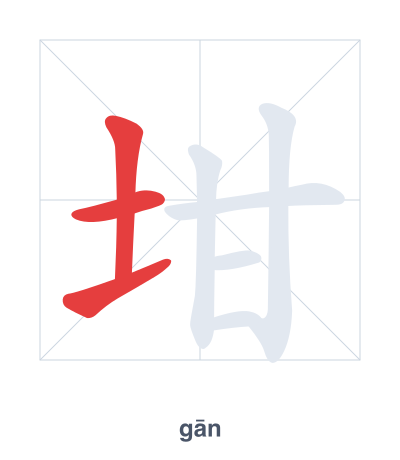
Stroke order practice for 坩 - gān

Practice Writing 坩 (gān)

Open Hanzi Writer to see the animated stroke order and practice writing 坩 with real-time feedback.

The character (gān) is written with 8 strokes. Follow the standard Chinese stroke order: top to bottom, left to right, outside before inside. The radical is one of its key components.

Practice the correct stroke order with the Hanzi Writer app to see animated stroke-by-stroke guidance with real-time feedback.

means crucible (component).

Character
Pinyingān (gan)
Meaningcrucible (component)
Strokes8
Radical
Difficulty3.7/5

坩 is a phono-semantic compound combining the radical 土 (earth/clay) with 甘 (gān, sweet) as a phonetic component. Clay crucibles were historically used for smelting, linking the earth radical to the tool's material.

💡 Memory Tip: Imagine a sweet (甘) clay pot (土) used to melt metals—a crucible that's surprisingly tasty to the furnace!

gān guō
crucible
gān guō qián
crucible tongs
cí gān guō
porcelain crucible

实验室里有很多坩埚。

shí yàn shì lǐ yǒu hěn duō gān guō

There are many crucibles in the laboratory.

请用坩埚钳夹住它。

qǐng yòng gān guō qián jiā zhù tā

Please use crucible tongs to hold it.

这是一个白色的瓷坩埚。

zhè shì yí gè bái sè de cí gān guō

This is a white porcelain crucible.

Character Pinyin Strokes Radical
(current) gān 8
zài 6
wéi / xū 6
6
Stroke order practice for 坩 - gān

Practice Writing 坩 (gān)

Open Hanzi Writer to see the animated stroke order and practice writing 坩 with real-time feedback.

✨ Animated stroke order · Handwriting recognition · HSK-graded practice · Free to use

Frequently Asked Questions about 坩

坩 is composed of the radical 土 (earth/clay) on the left and 甘 (gān, sweet) on the right. The 土 radical hints that the character relates to clay or earthen materials, while 甘 provides the sound gān and originally referred to a container shape. Together they form a pictophonetic character meaning a clay crucible used for melting metals.

Characters with Radical 土

Other 8-Stroke Characters