绂 (fú) means "ribbon for a seal, sash" in Chinese. It has 8 strokes with the radical 纟.
Rated 3.7/5 in difficulty (challenging).
Appears in 3+ common words including 绂冕 (fú miǎn), 玺绂 (xǐ fú), 绶绂 (shòu fú).
Due to its 8 strokes, Hanzi Writer's error detection shows 绂 requires focused practice — most learners need 10+ attempts for consistent accuracy.
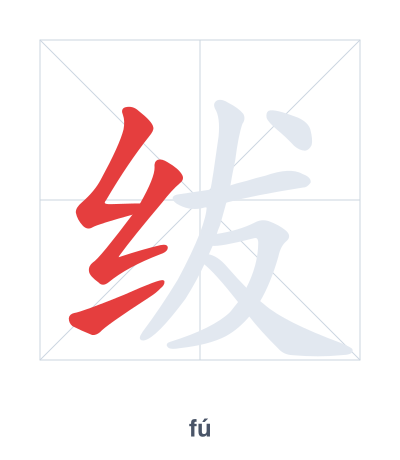
Open Hanzi Writer to see the animated stroke order and practice writing 绂 with real-time feedback.
The character 绂 (fú) is written with 8 strokes. Follow the standard Chinese stroke order: top to bottom, left to right, outside before inside. The radical 纟 is one of its key components.
Practice the correct stroke order with the Hanzi Writer app to see animated stroke-by-stroke guidance with real-time feedback.
绂 means ribbon for a seal, sash.
绂 is a phono-semantic compound characters: the left side 纟 (silk) indicates the material of a ribbon or sash, while the right side 犮 (bá, meaning 'to pull up') provides pronunciation and may hint at the ribbon's function of securing or drawing up a seal.
💡 Memory Tip: Imagine a silk ribbon (纟) tied to a dog (犮, a variant of 犬) that pulls a royal seal out of its box.
皇帝穿着华丽的绂冕。
huáng dì chuān zhe huá lì de fú miǎn
The Emperor wore a magnificent ceremonial robe and crown.
这是一个古代的玺绂。
zhè shì yí gè gǔ dài de xǐ fú
This is an ancient imperial seal and its ribbon.
他的衣服上挂着绶绂。
tā de yī fú shàng guà zhe shòu fú
There are ribbons on his clothes.
Open Hanzi Writer to see the animated stroke order and practice writing 绂 with real-time feedback.
✨ Animated stroke order · Handwriting recognition · HSK-graded practice · Free to use
The left side is the radical 纟, which means silk or thread, indicating that the character relates to fabric. The right side is 犮 (bō), which gives the pronunciation. Together, they create the meaning of a ribbon or sash made of silk, especially one used to attach a seal.