Hanzi Writer

How to Write 牍 (dú) — Meaning “Writing tablet / Document”

12 strokes Radical: 片

牍 (dú) means "Writing tablet / Document" in Chinese. It has 12 strokes with the radical 片.

Rated 4.2/5 in difficulty (advanced).

Appears in 3+ common words including 木牍 (mù dú), 文牍 (wén dú), 尺牍 (chǐ dú).

Due to its 12 strokes, Hanzi Writer's error detection shows 牍 requires focused practice — most learners need 10+ attempts for consistent accuracy.
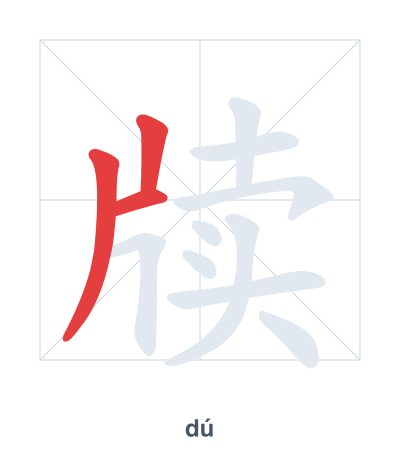
Stroke order practice for 牍 - dú

Practice Writing 牍 (dú)

Open Hanzi Writer to see the animated stroke order and practice writing 牍 with real-time feedback.

The character (dú) is written with 12 strokes. Follow the standard Chinese stroke order: top to bottom, left to right, outside before inside. The radical is one of its key components.

Practice the correct stroke order with the Hanzi Writer app to see animated stroke-by-stroke guidance with real-time feedback.

means Writing tablet / Document.

Character
Pinyindú (du)
MeaningWriting tablet / Document
Strokes12
Radical
Difficulty4.2/5

牍 is a compound character. The left radical 片 (a slab of wood) indicates a wooden writing surface, as ancient documents were often written on bamboo or wood strips. The right component 卖 (simplified from 賣) serves as a phonetic hint for the pronunciation dú, while its original meaning of 'to sell' may connect to the idea of a document recording transactions.

💡 Memory Tip: Imagine a wooden tablet (片) listing items for sale (卖) at a market stall.

mù dú
wooden tablets
wén dú
Official documents
chǐ dú
correspondence; letters

古人用木牍写字。

gǔ rén yòng mù dú xiě zì

Ancient people wrote on wooden tablets.

他在处理文牍。

tā zài chǔ lǐ wén dú

He is handling official documents.

这是一封尺牍。

zhè shì yī fēng chǐ dú

This is a letter.

Character Pinyin Strokes Radical
(current) 12
pái 12
dié 13
Stroke order practice for 牍 - dú

Practice Writing 牍 (dú)

Open Hanzi Writer to see the animated stroke order and practice writing 牍 with real-time feedback.

✨ Animated stroke order · Handwriting recognition · HSK-graded practice · Free to use

Frequently Asked Questions about 牍

The left side is the radical 片, which means "thin slice" or "tablet" and shows that the character relates to writing materials. The right side is 卖, which provides a phonetic hint for pronunciation (dú). Together, 牍 refers to a wooden writing tablet or document.

Characters with Radical 片

Other 12-Stroke Characters