贲 (bēn/bì) means "Bright; adorn" in Chinese. It has 9 strokes with the radical 贝.
Rated 4/5 in difficulty (challenging).
Appears in 3+ common words including 虎贲 (hǔ bēn), 贲临 (bì lín), 贲门 (bēn mén).
Due to its 9 strokes, Hanzi Writer's error detection shows 贲 requires focused practice — most learners need 10+ attempts for consistent accuracy.
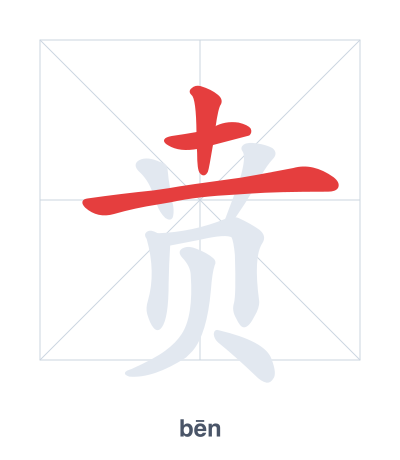
Open Hanzi Writer to see the animated stroke order and practice writing 贲 with real-time feedback.
The character 贲 (bēn/bì) is written with 9 strokes. Follow the standard Chinese stroke order: top to bottom, left to right, outside before inside. The radical 贝 is one of its key components.
Practice the correct stroke order with the Hanzi Writer app to see animated stroke-by-stroke guidance with real-time feedback.
贲 means Bright; adorn.
This is a polyphonic character with readings: bēn, bì.
The character 贲 combines a shell (贝) with grass (卉), suggesting a shell adorned with plants to convey brightness and decoration. Ancient forms depicted a decorated shell, linking the visual to the meaning of adornment.
💡 Memory Tip: Picture a shell (贝) wearing a fancy grass crown (卉), shining bright and adorned.
他是一名虎贲勇士。
tā shì yī míng hǔ bēn yǒng shì
He is a Huben warrior.
欢迎各位嘉宾贲临。
huān yíng gè wèi jiā bīn bì lín
Welcome, distinguished guests.
贲门位于胃的上方。
bēn mén wèi yú wèi de shàng fāng
The cardia is located at the top of the stomach.
Open Hanzi Writer to see the animated stroke order and practice writing 贲 with real-time feedback.
✨ Animated stroke order · Handwriting recognition · HSK-graded practice · Free to use
贲 is composed of a grass radical (艹) on top and a shell radical (贝) below. The grass suggests decoration or adornment, while the shell represents value, together implying something bright or beautifully decorated.