帑 (tǎng) means "treasury; public funds" in Chinese. It has 8 strokes with the radical 巾.
Rated 3.7/5 in difficulty (challenging).
Appears in 3+ common words including 公帑 (gōng tǎng), 国帑 (guó tǎng), 帑金 (tǎng jīn).
Due to its 8 strokes, Hanzi Writer's error detection shows 帑 requires focused practice — most learners need 10+ attempts for consistent accuracy.
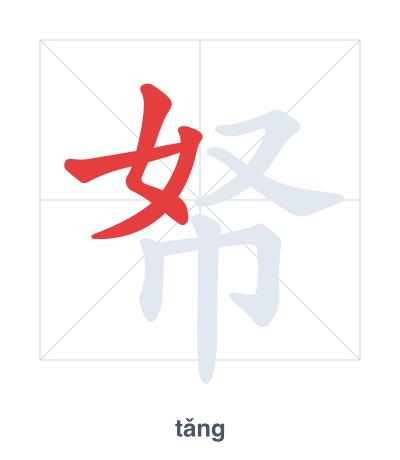
Open Hanzi Writer to see the animated stroke order and practice writing 帑 with real-time feedback.
The character 帑 (tǎng) is written with 8 strokes. Follow the standard Chinese stroke order: top to bottom, left to right, outside before inside. The radical 巾 is one of its key components.
Practice the correct stroke order with the Hanzi Writer app to see animated stroke-by-stroke guidance with real-time feedback.
帑 means treasury; public funds.
帑 is a phono-semantic compound where 巾 (cloth) depicts a bag or pouch for storing valuables, and 奴 (slave) provides a phonetic hint for the reading tǎng. In ancient China, cloth was used as currency and for safekeeping, so the character came to mean 'treasury' or 'public funds.'
💡 Memory Tip: Imagine a slave (奴) struggling to carry a huge cloth sack (巾) overflowing with gold coins—the public treasury.
不能浪费公帑。
bù néng làng fèi gōng tǎng
Public funds must not be wasted.
国帑用于国家建设。
guó tǎng yòng yú guó jiā jiàn shè
National funds are used for national construction.
帑金存放在库房。
tǎng jīn cún fàng zài kù fáng
Public funds are stored in the warehouse.
Open Hanzi Writer to see the animated stroke order and practice writing 帑 with real-time feedback.
✨ Animated stroke order · Handwriting recognition · HSK-graded practice · Free to use
帑 is composed of the radical 巾 (cloth) on top and the component 奴 (nú, slave) below. The cloth radical suggests something related to fabric or money, while 奴 provides the sound and adds the idea of something held or stored, together indicating a treasury for public funds.