昙 (tán) means "Cloudy / Epiphyllum" in Chinese. It has 8 strokes with the radical 日.
Rated 3.7/5 in difficulty (challenging).
Appears in 3+ common words including 昙花 (tán huā), 昙花一现 (tán huā yī xiàn), 优昙 (yōu tán).
Due to its 8 strokes, Hanzi Writer's error detection shows 昙 requires focused practice — most learners need 10+ attempts for consistent accuracy.
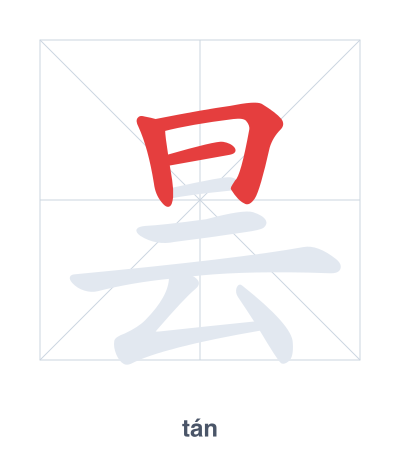
Open Hanzi Writer to see the animated stroke order and practice writing 昙 with real-time feedback.
The character 昙 (tán) is written with 8 strokes. Follow the standard Chinese stroke order: top to bottom, left to right, outside before inside. The radical 日 is one of its key components.
Practice the correct stroke order with the Hanzi Writer app to see animated stroke-by-stroke guidance with real-time feedback.
昙 means Cloudy / Epiphyllum.
昙 combines the sun radical 日 (rì) with the phonetic component 云 (yún, 'cloud'). The sun hidden behind clouds suggests a cloudy or overcast sky. The character is also used in the word 昙花 (tánhuā, 'epiphyllum'), referencing the flower's brief blooming as if glimpsed through a cloud.
💡 Memory Tip: Picture the sun (日) peeking out from behind a fluffy cloud (云) — a fleeting, cloudy moment like the ephemeral epiphyllum bloom.
昙花在晚上开放。
tán huā zài wǎn shàng kāi fàng
The epiphyllum blooms at night.
成功不是昙花一现。
chéng gōng bú shì tán huā yī xiàn
Success is not a flash in the pan.
优昙是一种花名。
yōu tán shì yī zhǒng huā míng
Udumbara is the name of a flower.
Open Hanzi Writer to see the animated stroke order and practice writing 昙 with real-time feedback.
✨ Animated stroke order · Handwriting recognition · HSK-graded practice · Free to use
昙 consists of the radical 日 (sun/day) on top and 云 (cloud) below. The combination suggests a "cloudy" sky, where the sun is hidden by clouds, which relates to its meaning of cloudy. This structure directly visualizes the concept of overcast weather.