Hanzi Writer

How to Write 裟 (shā)

裟 (shā) means "Buddhist cassock" in Chinese. It has 13 strokes with the radical 衣. Difficulty: 4.2/5.

shā
13 strokes Radical: 衣 Difficulty: 4.2/5

Buddhist cassock

How to Write 裟

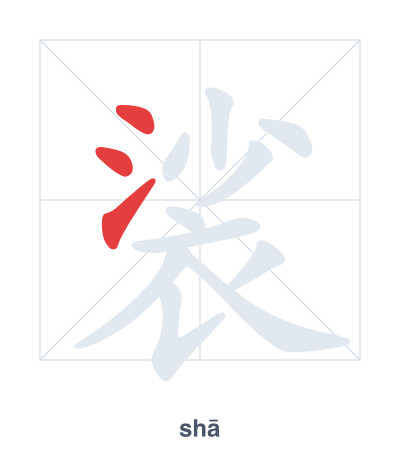
The character (shā) is written with 13 strokes. Follow the standard Chinese stroke order: top to bottom, left to right, outside before inside. The radical is one of its key components.

Practice the correct stroke order with the Hanzi Writer app to see animated stroke-by-stroke guidance with real-time feedback.

Meaning & Pronunciation

is pronounced shā in Mandarin Chinese. It means Buddhist cassock.

Common Words with 裟

袈裟 jiā shā
Kashaya (Buddhist monk's robe)
披袈裟 pī jiā shā
to wear a monk's robe
禅裟 chán shā
Buddhist monk's robe.

Example Sentences

和尚穿着一件袈裟。

hé shàng chuān zhe yī jiàn jiā shā

The monk is wearing a cassock.

他披上袈裟去念经。

tā pī shàng jiā shā qù niàn jīng

He put on his monk's robe to chant scriptures.

这件禅裟是红色的。

zhè jiàn chán shā shì hóng sè de

This Buddhist cassock is red.

Similar Characters

jiā
dài
mào
Stroke order practice for 裟 - shā

Practice Writing 裟 (shā)

Open Hanzi Writer to see the animated stroke order and practice writing 裟 with real-time feedback.

Frequently Asked Questions about 裟

Related Characters