瓤 (ráng) means "pulp or flesh of fruit" in Chinese. It has 22 strokes with the radical 瓜.
Rated 3.8/5 in difficulty (challenging).
Appears in 3+ common words including 瓜瓤 (guā ráng), 瓤子 (ráng zi), 红瓤 (hóng ráng).
Due to its 22 strokes, Hanzi Writer's error detection shows 瓤 requires focused practice — most learners need 10+ attempts for consistent accuracy.
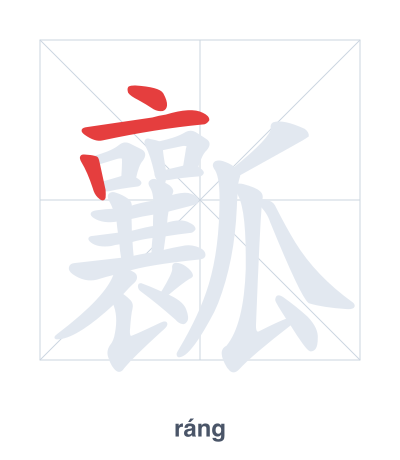
Open Hanzi Writer to see the animated stroke order and practice writing 瓤 with real-time feedback.
The character 瓤 (ráng) is written with 22 strokes. Follow the standard Chinese stroke order: top to bottom, left to right, outside before inside. The radical 瓜 is one of its key components.
Practice the correct stroke order with the Hanzi Writer app to see animated stroke-by-stroke guidance with real-time feedback.
瓤 means pulp or flesh of fruit.
| Character | 瓤 |
| Pinyin | ráng (rang) |
| Meaning | pulp or flesh of fruit |
| Strokes | 22 |
| Radical | 瓜 |
| Difficulty | 3.8/5 |
瓤 is a compound character where the radical 瓜 (melon/gourd) indicates it relates to fruit, while the phonetic component 襄 (xiāng, meaning 'assist') provides the pronunciation. Together, they depict the soft inner flesh or pulp of a melon or other fruit.
💡 Memory Tip: Picture a huge melon (瓜) split open, and inside a little helper (襄) is scooping out the sweet, juicy pulp to hand to you.
西瓜的瓜瓤是红的。
xī guā de guā ráng shì hóng de
The flesh of the watermelon is red.
这个瓜的瓤子很多。
zhè ge guā de ráng zi hěn duō
This melon has a lot of pulp.
我买了一个红瓤瓜。
wǒ mǎi le yí gè hóng ráng guā
I bought a red-fleshed melon.
Open Hanzi Writer to see the animated stroke order and practice writing 瓤 with real-time feedback.
✨ Animated stroke order · Handwriting recognition · HSK-graded practice · Free to use
The character 瓤 is made of the radical 瓜 (melon) on the left and the phonetic component 襄 on the right. The radical 瓜 directly links to the meaning of fruit pulp or flesh. The right part 襄 (xiāng) provides a rough pronunciation clue, though its own meaning does not contribute to the fruit-related idea.