Hanzi Writer

How to Write 芹 (qín)

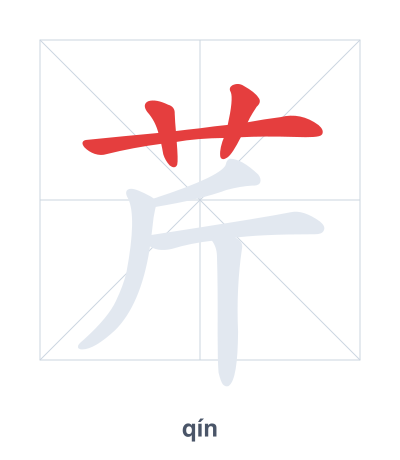
芹 (qín) means "Celery" in Chinese. It has 7 strokes with the radical 艹. Difficulty: 3.5/5.

qín
7 strokes Radical: 艹 Difficulty: 3.5/5

Celery

How to Write 芹

The character (qín) is written with 7 strokes. Follow the standard Chinese stroke order: top to bottom, left to right, outside before inside. The radical is one of its key components.

Practice the correct stroke order with the Hanzi Writer app to see animated stroke-by-stroke guidance with real-time feedback.

Meaning & Pronunciation

is pronounced qín in Mandarin Chinese. It means Celery.

Common Words with 芹

芹菜 qín cài
Celery
西芹 xī qín
Celery
炒芹菜 chǎo qín cài
stir-fried celery

Example Sentences

芹菜很有营养。

qín cài hěn yǒu yíng yǎng

Celery is very nutritious.

西芹可以做沙拉。

xī qín kě yǐ zuò shā lā

Celery can be used to make salad.

晚饭吃炒芹菜。

wǎn fàn chī chǎo qín cài

Having stir-fried celery for dinner.

Similar Characters

jiāo
Stroke order practice for 芹 - qín

Practice Writing 芹 (qín)

Open Hanzi Writer to see the animated stroke order and practice writing 芹 with real-time feedback.

Frequently Asked Questions about 芹

Related Characters