輂 (jú) means "A heavy cart" in Chinese. It has 13 strokes with the radical 车.
Rated 4.2/5 in difficulty (advanced).
Appears in 3+ common words including 輂车 (jú chē), 乘輂 (chéng jú), 大輂 (dà jú).
Due to its 13 strokes, Hanzi Writer's error detection shows 輂 requires focused practice — most learners need 10+ attempts for consistent accuracy.
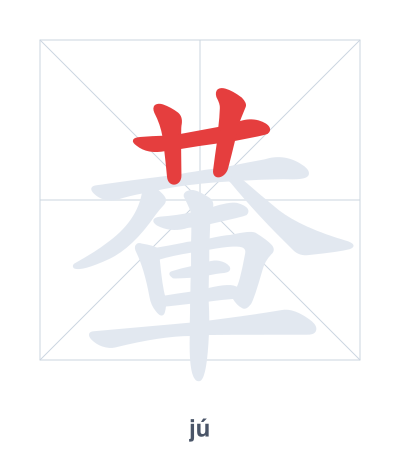
Open Hanzi Writer to see the animated stroke order and practice writing 輂 with real-time feedback.
The character 輂 (jú) is written with 13 strokes. Follow the standard Chinese stroke order: top to bottom, left to right, outside before inside. The radical 车 is one of its key components.
Practice the correct stroke order with the Hanzi Writer app to see animated stroke-by-stroke guidance with real-time feedback.
輂 means A heavy cart.
This character is a compound of 车 (cart) and 共 (together/widespread), suggesting a cart used to carry a large quantity of goods all together, hence a heavy cart. The right component 共 visually implies many items piled up, reinforcing the idea of weight and capacity.
💡 Memory Tip: Picture a cart (车) so overloaded with stacks of goods (共) that its wheels groan under the heavy load.
輂车在路上走。
jú chē zài lù shàng zǒu
The heavy cart is traveling on the road.
他喜欢乘輂。
tā xǐ huān chéng jú
He likes riding in a carriage.
这是一辆大輂。
zhè shì yī liàng dà jú
This is a large ancient cart.
Open Hanzi Writer to see the animated stroke order and practice writing 輂 with real-time feedback.
✨ Animated stroke order · Handwriting recognition · HSK-graded practice · Free to use
The character 輂 is made of two parts: the left side 车 (車) represents a vehicle or cart, and the right side 共 shows two hands working together. Together, they suggest a heavy cart that needs many people to push or pull it.