Hanzi Writer

How to Write 菡 (hàn) — Meaning “Lotus (root character)”

hàn 11 strokes Radical: 艹

菡 (hàn) means "Lotus (root character)" in Chinese. It has 11 strokes with the radical 艹.

Rated 4.2/5 in difficulty (advanced).

Appears in 3+ common words including 菡萏 (hàn dàn), 菡萏花 (hàn dàn huā), 菡萏香 (hàn dàn xiāng).

Due to its 11 strokes, Hanzi Writer's error detection shows 菡 requires focused practice — most learners need 10+ attempts for consistent accuracy.
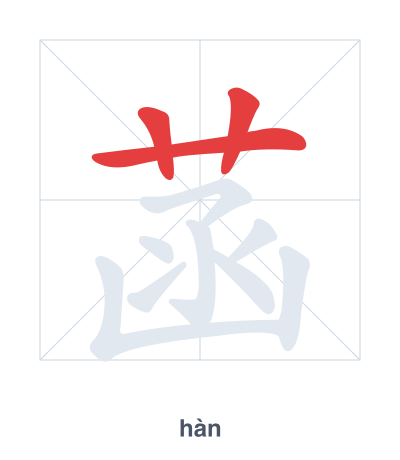
Stroke order practice for 菡 - hàn

Practice Writing 菡 (hàn)

Open Hanzi Writer to see the animated stroke order and practice writing 菡 with real-time feedback.

The character (hàn) is written with 11 strokes. Follow the standard Chinese stroke order: top to bottom, left to right, outside before inside. The radical is one of its key components.

Practice the correct stroke order with the Hanzi Writer app to see animated stroke-by-stroke guidance with real-time feedback.

means Lotus (root character).

Character
Pinyinhàn (han)
MeaningLotus (root character)
Strokes11
Radical
Difficulty4.2/5

菡 is a compound character with the plant radical 艹 (grass) and the phonetic component 函 (hán, meaning 'box' or 'envelope'). The character originally referred to the lotus flower bud, with the 'box' component suggesting the bud's closed, enveloped shape before it blooms into a lotus.

💡 Memory Tip: Picture a green plant (艹) holding a sealed box (函) that slowly opens to reveal a beautiful lotus flower inside.

hàn dàn
Lotus flower
hàn dàn huā
Lotus flower
hàn dàn xiāng
Lotus fragrance

菡萏就是荷花。

hàn dàn jiù shì hé huā

'Handan' is just another name for lotus.

菡萏花很美。

hàn dàn huā hěn měi

Lotus flowers are very beautiful.

闻到了菡萏香。

wén dào le hàn dàn xiāng

Smelled the fragrance of lotuses.

Character Pinyin Strokes Radical
(current) hàn 11
9
níng 9
zhǎ 9
Stroke order practice for 菡 - hàn

Practice Writing 菡 (hàn)

Open Hanzi Writer to see the animated stroke order and practice writing 菡 with real-time feedback.

✨ Animated stroke order · Handwriting recognition · HSK-graded practice · Free to use

Frequently Asked Questions about 菡

菡 is composed of the grass radical 艹 on top and the phonetic component 函 (hán) below. The grass radical indicates that the character relates to plants, specifically the lotus flower. The lower part 函 provides a sound clue, as the pronunciation hàn is similar to hán.

Characters with Radical 艹

Other 11-Stroke Characters