Hanzi Writer

How to Write 氐 (dī) — Meaning “Di (ancient ethnic group)”

5 strokes Radical: 氏

氐 (dī) means "Di (ancient ethnic group)" in Chinese. It has 5 strokes with the radical 氏.

Rated 2.9/5 in difficulty (moderate).

Appears in 3+ common words including 氐族 (dī zú), 氐首 (dī shǒu), 根氐 (gēn dī).

Hanzi Writer's stroke validation shows learners typically need 5-8 attempts to write 氐 with correct proportion and order.
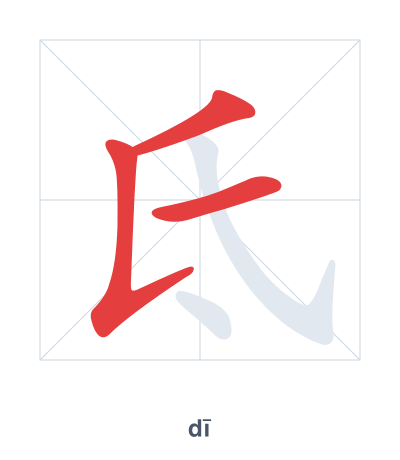
Stroke order practice for 氐 - dī

Practice Writing 氐 (dī)

Open Hanzi Writer to see the animated stroke order and practice writing 氐 with real-time feedback.

The character (dī) is written with 5 strokes. Follow the standard Chinese stroke order: top to bottom, left to right, outside before inside. The radical is one of its key components.

Practice the correct stroke order with the Hanzi Writer app to see animated stroke-by-stroke guidance with real-time feedback.

means Di (ancient ethnic group).

Character
Pinyindī (di)
MeaningDi (ancient ethnic group)
Strokes5
Radical
Difficulty2.9/5

氐 is a pictograph of a person (氏) with a dot (丶) representing a tail, symbolizing the Di ethnic group known for wearing tail ornaments. The ancient form shows a human figure with a dangling appendage, distinguishing this tribe from other groups.

💡 Memory Tip: Imagine a Di person with a tiny tail (the dot) poking out from under their robe (氏).

dī zú
the Di people
dī shǒu
to bow one's head
gēn dī
Root; Foundation

氐族历史悠久。

dī zú lì shǐ yōu jiǔ

The Di people have a long history.

他氐首不语。

tā dī shǒu bù yǔ

He lowered his head and remained silent.

这件事没有根氐。

zhè jiàn shì méi yǒu gēn dī

This matter has no foundation.

Character Pinyin Strokes Radical
(current) 5
shì 4
mín 5
Stroke order practice for 氐 - dī

Practice Writing 氐 (dī)

Open Hanzi Writer to see the animated stroke order and practice writing 氐 with real-time feedback.

✨ Animated stroke order · Handwriting recognition · HSK-graded practice · Free to use

Frequently Asked Questions about 氐

氐 is composed of 氏 (clan or family) at the top and a short horizontal line (一) at the bottom. The bottom line originally suggested a downward motion, and together with 氏 it conveys the idea of a specific clan or ethnic group, the Di people of ancient China.

Characters with Radical 氏

Other 5-Stroke Characters