熵 (shāng) means "entropy" in Chinese. It has 15 strokes with the radical 火.
Rated 4.2/5 in difficulty (advanced).
Appears in 3+ common words including 熵增 (shāng zēng), 熵值 (shāng zhí), 负熵 (fù shāng).
Due to its 15 strokes, Hanzi Writer's error detection shows 熵 requires focused practice — most learners need 10+ attempts for consistent accuracy.
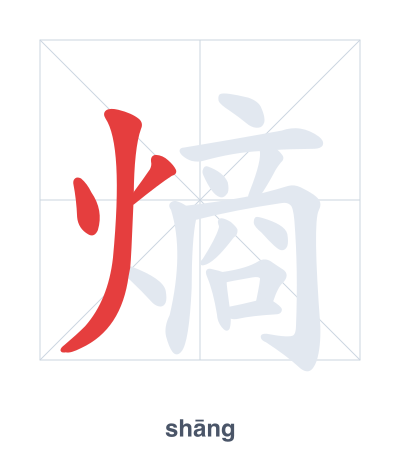
Open Hanzi Writer to see the animated stroke order and practice writing 熵 with real-time feedback.
The character 熵 (shāng) is written with 15 strokes. Follow the standard Chinese stroke order: top to bottom, left to right, outside before inside. The radical 火 is one of its key components.
Practice the correct stroke order with the Hanzi Writer app to see animated stroke-by-stroke guidance with real-time feedback.
熵 means entropy.
熵 is a modern compound character. The radical 火 (fire) links to heat and energy, while 商 (shāng) provides the pronunciation and hints at a 'quotient' or division—entropy is defined as heat divided by temperature in thermodynamics. Together, they visually represent a measure of thermal disorder.
💡 Memory Tip: Picture a fire (火) raging through a shopping mall (商), spreading chaos and increasing disorder like entropy.
宇宙在熵增。
yǔ zhòu zài shāng zēng
The universe is increasing in entropy.
这个系统的熵值很高。
zhè ge xì tǒng de shāng zhí hěn gāo
The entropy of this system is very high.
生命需要负熵。
shēng mìng xū yào fù shāng
Life requires negative entropy.
Open Hanzi Writer to see the animated stroke order and practice writing 熵 with real-time feedback.
✨ Animated stroke order · Handwriting recognition · HSK-graded practice · Free to use
熵 has the fire radical 火 on the left, which relates to heat or energy. The right side 商 (shāng) gives the pronunciation and originally meant 'discuss' or 'commerce', but here it functions as a phonetic component. Together, the character represents the concept of entropy, a measure of disorder in a thermodynamic system.