巯 (qiú) means "sulfhydryl; thiol" in Chinese. It has 12 strokes with the radical 工.
Rated 3.8/5 in difficulty (challenging).
Appears in 3+ common words including 巯基 (qiú jī), 巯基化 (qiú jī huà), 乙巯 (yǐ qiú).
Due to its 12 strokes, Hanzi Writer's error detection shows 巯 requires focused practice — most learners need 10+ attempts for consistent accuracy.
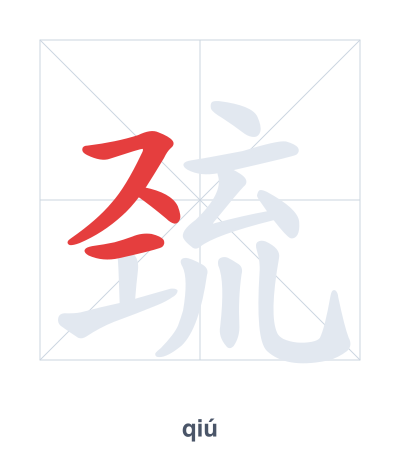
Open Hanzi Writer to see the animated stroke order and practice writing 巯 with real-time feedback.
The character 巯 (qiú) is written with 12 strokes. Follow the standard Chinese stroke order: top to bottom, left to right, outside before inside. The radical 工 is one of its key components.
Practice the correct stroke order with the Hanzi Writer app to see animated stroke-by-stroke guidance with real-time feedback.
巯 means sulfhydryl; thiol.
| Character | 巯 |
| Pinyin | qiú (qiu) |
| Meaning | sulfhydryl; thiol |
| Strokes | 12 |
| Radical | 工 |
| Difficulty | 3.8/5 |
巯 is a modern chemical character derived from 硫 (sulfur) by replacing the stone radical 石 with 工 (work), highlighting the reactive 'working' nature of the sulfhydryl group. The right component 㐬, a variant of the phonetic element in 流 (flow), hints at the sulfur base.
💡 Memory Tip: Picture a worker (工) sweating as he handles a stinky thiol compound (㐬), its sulfhydryl group smelling like rotten eggs.
这是一个巯基。
zhè shì yí gè qiú jī
This is a sulfhydryl group (thiol group).
这种物质被巯基化了。
zhè zhǒng wù zhì bèi qiú jī huà le
This substance has been thiolated.
乙巯是一种化学物质。
yǐ qiú shì yī zhǒng huà xué wù zhì
Ethanethiol is a chemical substance.
Open Hanzi Writer to see the animated stroke order and practice writing 巯 with real-time feedback.
✨ Animated stroke order · Handwriting recognition · HSK-graded practice · Free to use
The left side is 酉 (yǒu), which originally meant wine but in chemistry often relates to compounds. The right side is 九 (jiǔ) and a small dot, but together they form a phonetic component suggesting the sound "qiú". This character is a modern creation for chemical terminology, so its meaning comes from its use in scientific contexts rather than from traditional etymology.