泞 (nìng) means "Muddy." in Chinese. It has 8 strokes with the radical 氵.
Rated 3.7/5 in difficulty (challenging).
Appears in 3+ common words including 泥泞 (ní nìng), 泞滑 (nìng huá), 泞路 (nìng lù).
Due to its 8 strokes, Hanzi Writer's error detection shows 泞 requires focused practice — most learners need 10+ attempts for consistent accuracy.
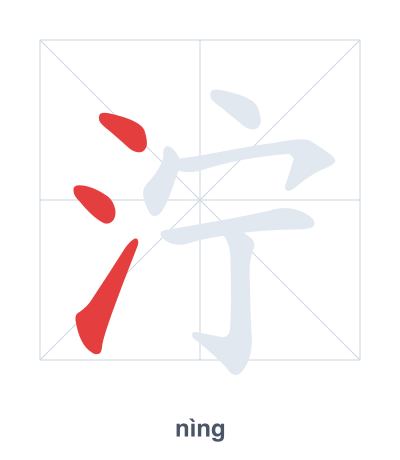
Open Hanzi Writer to see the animated stroke order and practice writing 泞 with real-time feedback.
The character 泞 (nìng) is written with 8 strokes. Follow the standard Chinese stroke order: top to bottom, left to right, outside before inside. The radical 氵 is one of its key components.
Practice the correct stroke order with the Hanzi Writer app to see animated stroke-by-stroke guidance with real-time feedback.
泞 means Muddy..
This character is a phono-semantic compound. The radical 氵 (water) indicates muddiness, while the component 宁 (níng) provides the pronunciation. Together, they depict water mixed with soil, resulting in mud.
💡 Memory Tip: Picture a muddy puddle (氵) where a person's head (the top of 宁) is stuck, making a 'ning' sound as they try to pull free.
雨后的路很泥泞。
yǔ hòu de lù hěn ní nìng
The road is very muddy after the rain.
地面泥泞湿滑。
dì miàn ní nìng shī huá
The ground is muddy and slippery.
泞路很难走。
nìng lù hěn nán zǒu
The muddy road is difficult to walk on.
Open Hanzi Writer to see the animated stroke order and practice writing 泞 with real-time feedback.
✨ Animated stroke order · Handwriting recognition · HSK-graded practice · Free to use
The left side is 氵, the water radical, indicating the character relates to water or liquid. The right side is 宁 (níng), which provides the sound but also suggests a state of being stuck or settled, like water making the ground muddy.