眳 (míng) means "to look or gaze" in Chinese. It has 11 strokes with the radical 目.
Rated 4.2/5 in difficulty (advanced).
Appears in 3+ common words including 眳眇 (míng miǎo), 眳眳 (míng míng), 眳视 (míng shì).
Due to its 11 strokes, Hanzi Writer's error detection shows 眳 requires focused practice — most learners need 10+ attempts for consistent accuracy.
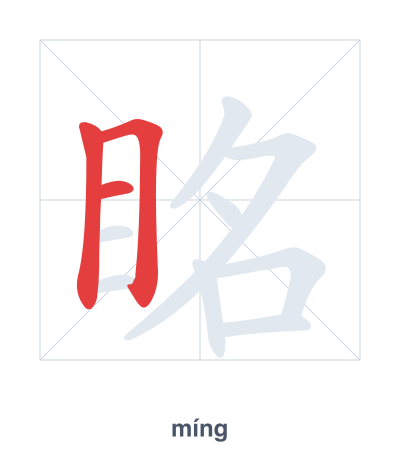
Open Hanzi Writer to see the animated stroke order and practice writing 眳 with real-time feedback.
The character 眳 (míng) is written with 11 strokes. Follow the standard Chinese stroke order: top to bottom, left to right, outside before inside. The radical 目 is one of its key components.
Practice the correct stroke order with the Hanzi Writer app to see animated stroke-by-stroke guidance with real-time feedback.
眳 means to look or gaze.
The character 眳 combines the eye radical 目 (目, 'eye') with the phonetic component 冥 (míng, meaning 'dark' or 'deep'), suggesting a gaze that penetrates darkness or focuses intently.
💡 Memory Tip: Imagine an eye (目) peering through the dark depths (冥) to gaze at something far away.
这里的景色很眳眇。
zhè lǐ de jǐng sè hěn míng miǎo
The scenery here is hazy and distant.
他的眼神眳眳的。
tā de yǎn shén míng míng de
His gaze is dim and dull.
他在眳视远方。
tā zài míng shì yuǎn fāng
He is gazing into the distance.
Open Hanzi Writer to see the animated stroke order and practice writing 眳 with real-time feedback.
✨ Animated stroke order · Handwriting recognition · HSK-graded practice · Free to use
眳 is made of the radical 目 (eye) on the left and 名 (name) on the right. The eye part shows that the meaning involves seeing, while 名 gives the pronunciation and may hint at identifying or naming something through a gaze. Together they create the idea of looking or gazing intently.