Hanzi Writer

How to Write 麿 (mí) — Meaning “Maro (Japanese kanji used in names)”

17 strokes Radical: 麻

麿 (mí) means "Maro (Japanese kanji used in names)" in Chinese. It has 17 strokes with the radical 麻.

Rated 4.2/5 in difficulty (advanced).

Appears in 1+ common words including 麿 (mí).

Due to its 17 strokes, Hanzi Writer's error detection shows 麿 requires focused practice — most learners need 10+ attempts for consistent accuracy.
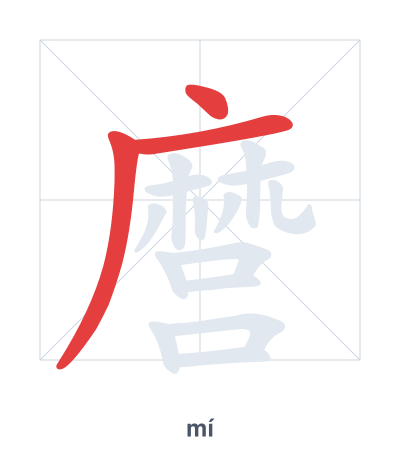
Stroke order practice for 麿 - mí

Practice Writing 麿 (mí)

Open Hanzi Writer to see the animated stroke order and practice writing 麿 with real-time feedback.

The character 麿 (mí) is written with 17 strokes. Follow the standard Chinese stroke order: top to bottom, left to right, outside before inside. The radical is one of its key components.

Practice the correct stroke order with the Hanzi Writer app to see animated stroke-by-stroke guidance with real-time feedback.

麿 means Maro (Japanese kanji used in names).

Character麿
Pinyinmí (mi)
MeaningMaro (Japanese kanji used in names)
Strokes17
Radical
Difficulty4.2/5

麿 is a Japanese-made kanji (kokuji) combining 麻 (hemp, read 'ma') and 呂 (spine, read 'ro') to represent the phonetic reading 'maro'. It was created as a name suffix in Japan and does not carry a literal meaning from its components.

💡 Memory Tip: Picture a hemp plant (麻) growing through a spine (呂) to spell 'Ma-ro' on a name tag.

麿
Maro (Japanese kanji used in names)

这是一个生僻字。

zhè shì yí gè shēng pì zì

This is a rare character.

这个字常用于人名。

zhè ge zì cháng yòng yú rén míng

This character is often used in names.

我在书里见过它。

wǒ zài shū lǐ jiàn guò tā

I have seen it in a book.

Character Pinyin Strokes Radical
麿 (current) 17
mí / mǐ 19
huī 15
Stroke order practice for 麿 - mí

Practice Writing 麿 (mí)

Open Hanzi Writer to see the animated stroke order and practice writing 麿 with real-time feedback.

✨ Animated stroke order · Handwriting recognition · HSK-graded practice · Free to use

Frequently Asked Questions about 麿

麿 is composed of the radical 麻 (hemp) on top and the component 口 (mouth) below. The radical hints at the sound or origin, while the mouth component gives the character its overall shape. This structure is unique to this character and does not follow a common Chinese character pattern.

Characters with Radical 麻

Other 17-Stroke Characters