阞 (lè) means "remainder; surplus" in Chinese. It has 4 strokes with the radical 阝.
Rated 2.4/5 in difficulty (moderate).
Appears in 1+ common words including 阞 (lè).
Hanzi Writer's stroke validation shows learners typically need 5-8 attempts to write 阞 with correct proportion and order.
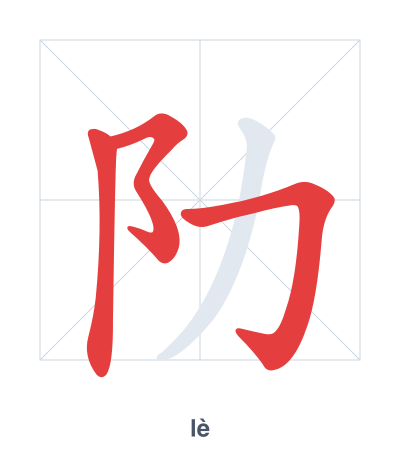
Open Hanzi Writer to see the animated stroke order and practice writing 阞 with real-time feedback.
The character 阞 (lè) is written with 4 strokes. Follow the standard Chinese stroke order: top to bottom, left to right, outside before inside. The radical 阝 is one of its key components.
Practice the correct stroke order with the Hanzi Writer app to see animated stroke-by-stroke guidance with real-time feedback.
阞 means remainder; surplus.
阞 is a compound character: the left radical 阝 (a mound or hill) combines with 力 (strength) on the right. The image of a mound with extra strength or leftover earth suggests a surplus or remainder.
💡 Memory Tip: Picture a hill (阝) with a leftover pile of dirt shaped like a strong arm (力) — that's the surplus remaining.
阞是一个汉字。
lè shì yí gè hàn zì
'Lè' is a Chinese character.
这个字读作lè。
zhè ge zì dú zuò lè。
This character is pronounced 'lè'.
阞的意思是余数。
lè de yì si shì yú shù
'Lè' means remainder.
Open Hanzi Writer to see the animated stroke order and practice writing 阞 with real-time feedback.
✨ Animated stroke order · Handwriting recognition · HSK-graded practice · Free to use
阞 is made of two parts: the left radical 阝 (a variant of 阜, meaning a mound or hill) and the right component 力 (meaning strength or force). The combination might suggest leftover land after using force, which connects to its meaning of "remainder" or "surplus." This character is very rare and not used in everyday modern Chinese.