彪 (biāo) means "tiger-like; brave" in Chinese. It has 11 strokes with the radical 彡.
Rated 4.2/5 in difficulty (advanced).
Appears in 3+ common words including 阿彪 (ā biāo), 彪悍 (biāo hàn), 彪形大汉 (biāo xíng dà hàn).
Due to its 11 strokes, Hanzi Writer's error detection shows 彪 requires focused practice — most learners need 10+ attempts for consistent accuracy.
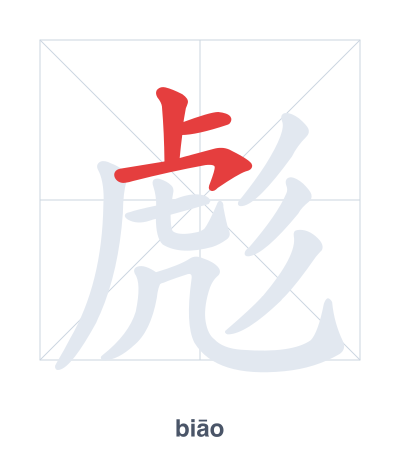
Open Hanzi Writer to see the animated stroke order and practice writing 彪 with real-time feedback.
The character 彪 (biāo) is written with 11 strokes. Follow the standard Chinese stroke order: top to bottom, left to right, outside before inside. The radical 彡 is one of its key components.
Practice the correct stroke order with the Hanzi Writer app to see animated stroke-by-stroke guidance with real-time feedback.
彪 means tiger-like; brave.
| Character | 彪 |
| Pinyin | biāo (biao) |
| Meaning | tiger-like; brave |
| Strokes | 11 |
| Radical | 彡 |
| Difficulty | 4.2/5 |
彪 combines the tiger radical 虎 (meaning tiger) with 彡 (three strokes representing stripes or markings). The character originally depicted a tiger with distinct stripes, symbolizing its fierce and brave nature.
💡 Memory Tip: Imagine a tiger (虎) with three bold stripes (彡) showing off its bravery.
他外号叫阿彪。
tā wài hào jiào ā biāo
His nickname is A Biao.
他长得很彪悍。
tā zhǎng dé hěn biāo hàn
He looks tough and sturdy.
他是个彪形大汉。
tā shì gè biāo xíng dà hàn
He is a burly man.
Open Hanzi Writer to see the animated stroke order and practice writing 彪 with real-time feedback.
✨ Animated stroke order · Handwriting recognition · HSK-graded practice · Free to use
彪 combines the tiger radical (虍) on the left with three stripes (彡) on the right. The tiger represents fierceness, and the stripes suggest a tiger's markings, together creating the idea of 'tiger-like' or 'brave'.