禸 (róu) means "Trampled footprint (Chinese radical 114)" in Chinese. It has 5 strokes with the radical 禸.
Rated 2.3/5 in difficulty (moderate).
Appears in 3+ common words including 禸部 (róu bù), 禸字 (róu zì), 禸头 (róu tóu).
Hanzi Writer's stroke validation shows learners typically need 5-8 attempts to write 禸 with correct proportion and order.
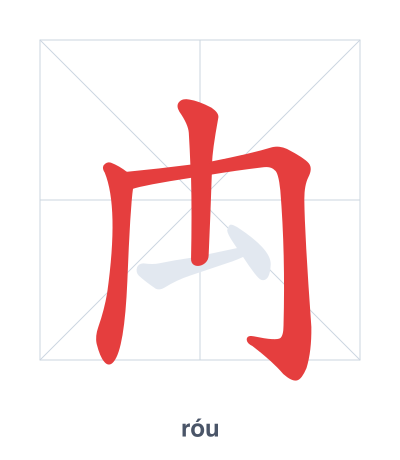
Open Hanzi Writer to see the animated stroke order and practice writing 禸 with real-time feedback.
The character 禸 (róu) is written with 5 strokes. Follow the standard Chinese stroke order: top to bottom, left to right, outside before inside. The radical 禸 is one of its key components.
Practice the correct stroke order with the Hanzi Writer app to see animated stroke-by-stroke guidance with real-time feedback.
禸 means Trampled footprint (Chinese radical 114).
| Character | 禸 |
| Pinyin | róu (rou) |
| Meaning | Trampled footprint (Chinese radical 114) |
| Strokes | 5 |
| Radical | 禸 |
| Difficulty | 2.3/5 |
禸 is a pictograph of a trampled footprint or animal track, with the ancient form showing a paw or claw print that has been pressed into the ground. The modern shape retains a twisted, squashed appearance, suggesting something that has been stepped on or crushed underfoot.
💡 Memory Tip: Imagine a wild animal's paw print (three toes and a pad) that has been stomped flat by a giant boot, leaving a messy, squished shape.
禸部是汉字部首。
róu bù shì hàn zì bù shǒu
The 'rou' radical is a Chinese character radical.
这个字是禸字。
zhè ge zì shì róu zì
This character is '禸'.
禸头在字的最下面。
róu tóu zài zì de zuì xià miàn
The 'rou' component is at the bottom of the character.
Open Hanzi Writer to see the animated stroke order and practice writing 禸 with real-time feedback.
✨ Animated stroke order · Handwriting recognition · HSK-graded practice · Free to use
禸 is a single-stroke radical that represents a trampled footprint. It is composed of a vertical stroke with a horizontal line crossing near the top, resembling a footprint mark. This character is not combined with other components; it stands alone as its own radical.