匊 (jū) means "to scoop up with both hands" in Chinese. It has 8 strokes with the radical 勹.
Rated 3.4/5 in difficulty (challenging).
Appears in 3+ common words including 匊水 (jū shuǐ), 匊起 (jū qǐ), 匊捧 (jū pěng).
Due to its 8 strokes, Hanzi Writer's error detection shows 匊 requires focused practice — most learners need 10+ attempts for consistent accuracy.
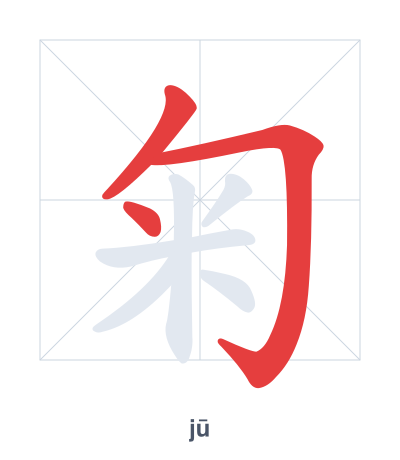
Open Hanzi Writer to see the animated stroke order and practice writing 匊 with real-time feedback.
The character 匊 (jū) is written with 8 strokes. Follow the standard Chinese stroke order: top to bottom, left to right, outside before inside. The radical 勹 is one of its key components.
Practice the correct stroke order with the Hanzi Writer app to see animated stroke-by-stroke guidance with real-time feedback.
匊 means to scoop up with both hands.
| Character | 匊 |
| Pinyin | jū (ju) |
| Meaning | to scoop up with both hands |
| Strokes | 8 |
| Radical | 勹 |
| Difficulty | 3.4/5 |
The character 匊 combines the wrapper radical 勹, which resembles two hands cupping, with 米 (rice) inside, depicting the action of scooping up grains with both hands.
💡 Memory Tip: Imagine both hands forming a bowl (勹) to scoop up a heap of rice (米) in one motion.
他在小溪边匊水。
tā zài xiǎo xī biān jū shuǐ
He is scooping up water by the stream.
他匊起一把沙子。
tā jū qǐ yī bǎ shā zi
He scooped up a handful of sand.
他双手匊捧着花。
tā shuāng shǒu jū pěng zhe huā
He held the flowers in both hands.
Open Hanzi Writer to see the animated stroke order and practice writing 匊 with real-time feedback.
✨ Animated stroke order · Handwriting recognition · HSK-graded practice · Free to use
匊 is composed of the radical 勹 (wrap) on top and 米 (rice) below. The 勹 suggests enclosing or holding something, while 米 represents the object being held. Together, they depict using both hands to scoop up rice, reflecting the meaning of scooping up with both hands.