鬲 (gé) means "ancient cooking vessel" in Chinese. It has 10 strokes with the radical 鬲.
Rated 3.5/5 in difficulty (challenging).
Appears in 3+ common words including 陶鬲 (táo gé), 瓦鬲 (wǎ gé), 鬲津 (gé jīn).
Due to its 10 strokes, Hanzi Writer's error detection shows 鬲 requires focused practice — most learners need 10+ attempts for consistent accuracy.
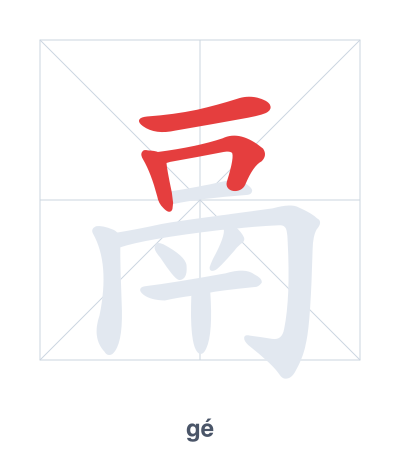
Open Hanzi Writer to see the animated stroke order and practice writing 鬲 with real-time feedback.
The character 鬲 (gé) is written with 10 strokes. Follow the standard Chinese stroke order: top to bottom, left to right, outside before inside. The radical 鬲 is one of its key components.
Practice the correct stroke order with the Hanzi Writer app to see animated stroke-by-stroke guidance with real-time feedback.
鬲 means ancient cooking vessel.
| Character | 鬲 |
| Pinyin | gé (ge) |
| Meaning | ancient cooking vessel |
| Strokes | 10 |
| Radical | 鬲 |
| Difficulty | 3.5/5 |
鬲 is a pictograph depicting an ancient three-legged cooking pot with a handle, used for boiling food or water. The bronze script form clearly shows the vessel's tripod legs and a wide body, which evolved into the modern stylized shape.
💡 Memory Tip: Imagine a three-legged pot (鬲) with a lid that has two handles on top, like a funny face with ears, ready to cook your soup.
博物馆里有陶鬲。
bó wù guǎn lǐ yǒu táo gé
There are pottery cooking vessels (li) in the museum.
这是一个古代瓦鬲。
zhè shì yí gè gǔ dài wǎ gé
This is an ancient pottery cooking vessel.
鬲津是一条古河。
gé jīn shì yī tiáo gǔ hé
Gejin is an ancient river.
Open Hanzi Writer to see the animated stroke order and practice writing 鬲 with real-time feedback.
✨ Animated stroke order · Handwriting recognition · HSK-graded practice · Free to use
鬲 is a pictographic character that depicts an ancient tripod cooking vessel with three legs. Its shape directly represents the three-legged pottery or bronze pot used for heating food in ancient China. There are no separate radical components—the entire character functions as its own radical.