苻 (fú) means "A surname; a type of grass" in Chinese. It has 8 strokes with the radical 艹.
Rated 3.7/5 in difficulty (challenging).
Appears in 3+ common words including 姓苻 (xìng fú), 苻坚 (fú jiān), 苻草 (fú cǎo).
Due to its 8 strokes, Hanzi Writer's error detection shows 苻 requires focused practice — most learners need 10+ attempts for consistent accuracy.
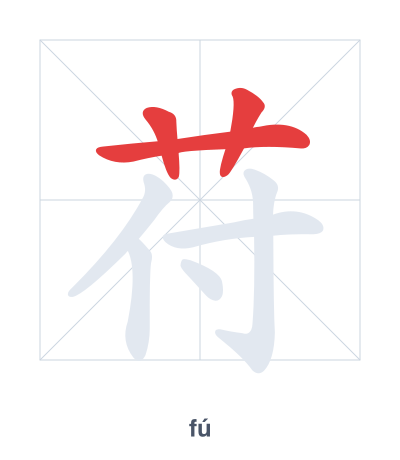
Open Hanzi Writer to see the animated stroke order and practice writing 苻 with real-time feedback.
The character 苻 (fú) is written with 8 strokes. Follow the standard Chinese stroke order: top to bottom, left to right, outside before inside. The radical 艹 is one of its key components.
Practice the correct stroke order with the Hanzi Writer app to see animated stroke-by-stroke guidance with real-time feedback.
苻 means A surname; a type of grass.
苻 is a phono-semantic compound: the radical 艹 (grass) indicates its plant nature, while 付 (fù) provides the pronunciation. It originally referred to a specific type of grass and later became a common Chinese surname.
💡 Memory Tip: Picture a patch of grass (艹) growing on top of a payment slip (付), marking a unique surname that's worth remembering.
我的老师姓苻。
wǒ de lǎo shī xìng fú
My teacher's surname is Fu.
苻坚是古代的一位皇帝。
fú jiān shì gǔ dài de yī wèi huáng dì
Fu Jian was an emperor in ancient times.
这种植物叫作苻草。
zhè zhòng zhí wù jiào zuò fú cǎo
This plant is called Fucao.
Open Hanzi Writer to see the animated stroke order and practice writing 苻 with real-time feedback.
✨ Animated stroke order · Handwriting recognition · HSK-graded practice · Free to use
苻 is made of the grass radical 艹 on top and the phonetic component 付 (fù) below. The grass radical indicates that the character originally referred to a type of plant, while 付 provides a clue to the pronunciation. Together, 苻 means a kind of herb, though today it is most often used as a surname.