昉 (fǎng) means "dawn; beginning" in Chinese. It has 8 strokes with the radical 日.
Rated 3.7/5 in difficulty (challenging).
Appears in 3+ common words including 昉亮 (fǎng liàng), 昉旦 (fǎng dàn), 昉明 (fǎng míng).
Due to its 8 strokes, Hanzi Writer's error detection shows 昉 requires focused practice — most learners need 10+ attempts for consistent accuracy.
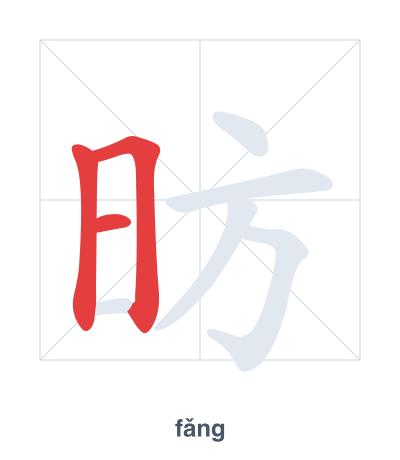
Open Hanzi Writer to see the animated stroke order and practice writing 昉 with real-time feedback.
The character 昉 (fǎng) is written with 8 strokes. Follow the standard Chinese stroke order: top to bottom, left to right, outside before inside. The radical 日 is one of its key components.
Practice the correct stroke order with the Hanzi Writer app to see animated stroke-by-stroke guidance with real-time feedback.
昉 means dawn; beginning.
昉 combines the sun radical 日 with the phonetic component 方 (fāng), suggesting the first light of dawn—the sun just appearing on the horizon marks the beginning of day.
💡 Memory Tip: At dawn, the sun (日) rises beside a square (方) tower, signaling the start of a new day.
天色已经昉亮了。
tiān sè yǐ jīng fǎng liàng le
The sky has already begun to brighten.
这是一个新的昉旦。
zhè shì yí gè xīn de fǎng dàn
This is a new dawn.
东方开始昉明。
dōng fāng kāi shǐ fǎng míng
The east is beginning to brighten.
Open Hanzi Writer to see the animated stroke order and practice writing 昉 with real-time feedback.
✨ Animated stroke order · Handwriting recognition · HSK-graded practice · Free to use
昉 is composed of the radical 日 (sun) on the left and 方 (direction) on the right. The sun appearing from a certain direction suggests the first light of day, which gives the character its meanings of dawn and beginning.