钣 (bǎn) means "Metal plate" in Chinese. It has 9 strokes with the radical 钅.
Rated 4/5 in difficulty (challenging).
Appears in 3+ common words including 钣金 (bǎn jīn), 钣金工 (bǎn jīn gōng), 钣金件 (bǎn jīn jiàn).
Due to its 9 strokes, Hanzi Writer's error detection shows 钣 requires focused practice — most learners need 10+ attempts for consistent accuracy.
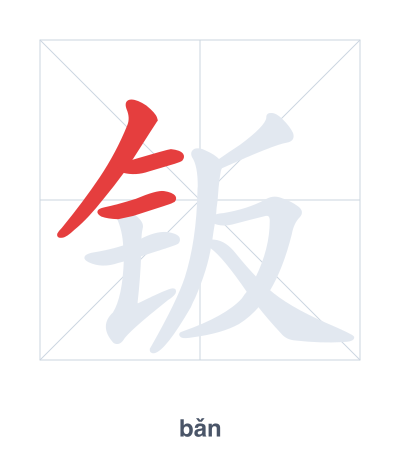
Open Hanzi Writer to see the animated stroke order and practice writing 钣 with real-time feedback.
The character 钣 (bǎn) is written with 9 strokes. Follow the standard Chinese stroke order: top to bottom, left to right, outside before inside. The radical 钅 is one of its key components.
Practice the correct stroke order with the Hanzi Writer app to see animated stroke-by-stroke guidance with real-time feedback.
钣 means Metal plate.
钣 is a phono-semantic compound: the left part 钅 (metal) indicates the material, and the right part 反 (fǎn, 'reverse' or 'turn') gives the approximate sound and hints at the idea of a flat sheet that can be bent or turned. It specifically refers to a metal plate or sheet used in manufacturing and repair.
💡 Memory Tip: Imagine a metal sheet (钅) being flipped over (反) to form a flat plate—you 'ban' it into shape!.
我的车需要做钣金维修。
wǒ de chē xū yào zuò bǎn jīn wéi xiū
My car needs bodywork repair.
他是一名优秀的钣金工。
tā shì yī míng yōu xiù de bǎn jīn gōng
He is an excellent sheet metal worker.
这些钣金件是铝做的。
zhè xiē bǎn jīn jiàn shì lǚ zuò de
These sheet metal parts are made of aluminum.
Open Hanzi Writer to see the animated stroke order and practice writing 钣 with real-time feedback.
✨ Animated stroke order · Handwriting recognition · HSK-graded practice · Free to use
钣 is made of two parts: the left side 钅 (the metal radical) and the right side 反 (fǎn). The metal radical shows it is related to metal, while 反 gives the pronunciation bǎn and also suggests the idea of bending or reversing, since sheet metal can be shaped by bending.