烊 (yáng/yàng) means "to melt (metal); to dissolve" in Chinese. It has 10 strokes with the radical 火.
Rated 4.2/5 in difficulty (advanced).
Appears in 3+ common words including 打烊 (dǎ yàng), 烊化 (yáng huà), 快打烊 (kuài dǎ yàng).
Due to its 10 strokes, Hanzi Writer's error detection shows 烊 requires focused practice — most learners need 10+ attempts for consistent accuracy.
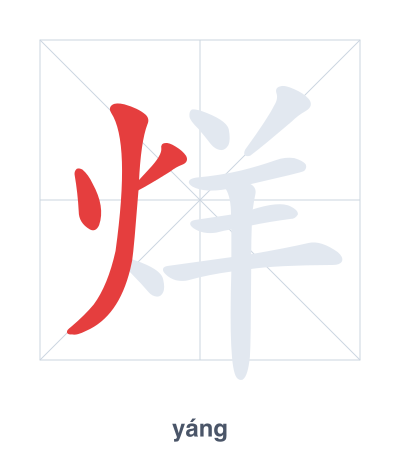
Open Hanzi Writer to see the animated stroke order and practice writing 烊 with real-time feedback.
The character 烊 (yáng/yàng) is written with 10 strokes. Follow the standard Chinese stroke order: top to bottom, left to right, outside before inside. The radical 火 is one of its key components.
Practice the correct stroke order with the Hanzi Writer app to see animated stroke-by-stroke guidance with real-time feedback.
烊 means to melt (metal); to dissolve.
This is a polyphonic character with readings: yáng, yàng.
烊 is a phono-semantic compound combining the radical 火 (fire) on the left, indicating heat or melting, and 羊 (yáng, sheep) on the right as a phonetic component. The character originally referred to melting metals using intense heat from fire.
💡 Memory Tip: Imagine a sheep made of metal standing too close to a blazing fire, and it gradually melts into a pool of molten wool.
商店打烊了。
shāng diàn dǎ yàng le
The store is closed for the day.
糖在水里烊化了。
táng zài shuǐ lǐ yáng huà le
The sugar melted in the water.
超市快打烊了。
chāo shì kuài dǎ yàng le
The supermarket is about to close.
Open Hanzi Writer to see the animated stroke order and practice writing 烊 with real-time feedback.
✨ Animated stroke order · Handwriting recognition · HSK-graded practice · Free to use
烊 is formed by the radical 火 (fire) on the left and the phonetic component 羊 (sheep) on the right. The fire radical suggests heat, which connects to the character's meaning of melting or dissolving metal. The right side 羊 mainly gives the sound (yáng) but also hints at the idea of something being transformed by fire.