豇 (jiāng) means "cowpea" in Chinese. It has 10 strokes with the radical 豆.
Rated 4.2/5 in difficulty (advanced).
Appears in 3+ common words including 豇豆 (jiāng dòu), 炒豇豆 (chǎo jiāng dòu), 长豇豆 (zhǎng jiāng dòu).
Due to its 10 strokes, Hanzi Writer's error detection shows 豇 requires focused practice — most learners need 10+ attempts for consistent accuracy.
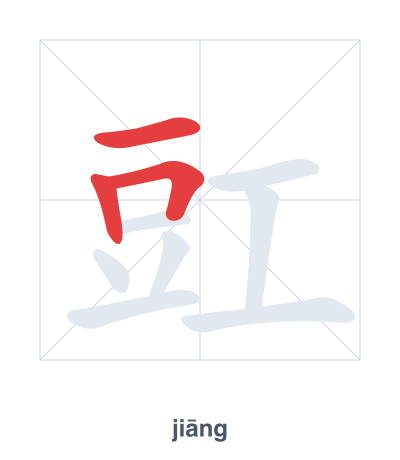
Open Hanzi Writer to see the animated stroke order and practice writing 豇 with real-time feedback.
The character 豇 (jiāng) is written with 10 strokes. Follow the standard Chinese stroke order: top to bottom, left to right, outside before inside. The radical 豆 is one of its key components.
Practice the correct stroke order with the Hanzi Writer app to see animated stroke-by-stroke guidance with real-time feedback.
豇 means cowpea.
| Character | 豇 |
| Pinyin | jiāng (jiang) |
| Meaning | cowpea |
| Strokes | 10 |
| Radical | 豆 |
| Difficulty | 4.2/5 |
This character is a phono-semantic compound where 豆 (dòu, 'bean') indicates the category of legumes, and 工 (gōng, 'work') provides a phonetic clue (with a sound shift to jiāng). The cowpea is a type of bean, so the bean radical signifies its plant family.
💡 Memory Tip: Imagine a bean (豆) that works (工) like a labourer to stretch itself into a long, slender cowpea pod.
妈妈买了新鲜的豇豆。
mā mā mǎi le xīn xiān de jiāng dòu
Mom bought fresh cowpeas.
今天的午饭有炒豇豆。
jīn tiān de wǔ fàn yǒu chǎo jiāng dòu
Today's lunch includes stir-fried cowpeas.
长豇豆可以用来腌制。
zhǎng jiāng dòu kě yǐ yòng lái yān zhì
Yardlong beans can be used for pickling.
Open Hanzi Writer to see the animated stroke order and practice writing 豇 with real-time feedback.
✨ Animated stroke order · Handwriting recognition · HSK-graded practice · Free to use
豇 is a left-right character. The left part is 豆, the radical for beans, which gives the meaning 'cowpea' or 'bean'. The right part is 工, which primarily provides the sound jiāng in the pronunciation.