沆 (hàng) means "Mist / Vast water" in Chinese. It has 7 strokes with the radical 氵.
Rated 3.5/5 in difficulty (challenging).
Appears in 3+ common words including 沆瀣一气 (hàng xiè yī qì), 沆茫 (hàng máng), 沆瀣 (hàng xiè).
Due to its 7 strokes, Hanzi Writer's error detection shows 沆 requires focused practice — most learners need 10+ attempts for consistent accuracy.
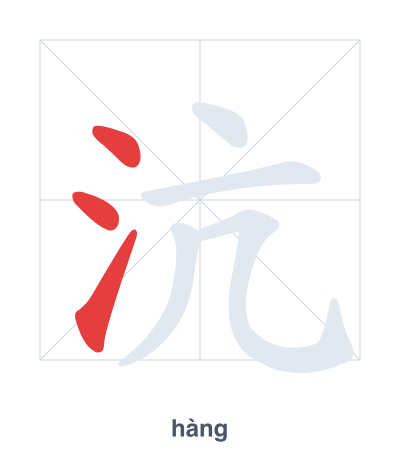
Open Hanzi Writer to see the animated stroke order and practice writing 沆 with real-time feedback.
The character 沆 (hàng) is written with 7 strokes. Follow the standard Chinese stroke order: top to bottom, left to right, outside before inside. The radical 氵 is one of its key components.
Practice the correct stroke order with the Hanzi Writer app to see animated stroke-by-stroke guidance with real-time feedback.
沆 means Mist / Vast water.
沆 is a compound character combining the water radical 氵 with 亢, which originally meant 'neck' or 'high'. Together they evoke rising mist or vast, high waters, as if the water stretches into the horizon or vapor lifts into the air.
💡 Memory Tip: Picture a vast lake (氵) where the water rises so high (亢) that it turns into thick fog—mist you can almost touch.
他们两人沆瀣一气。
tā men liǎng rén hàng xiè yī qì
The two of them are in cahoots.
湖面上水色沆茫。
hú miàn shàng shuǐ sè hàng máng
The water on the lake is vast and misty.
沆瀣是指深夜的露气。
hàng xiè shì zhǐ shēn yè de lù qì
'Hangxie' refers to the mist or dew of late night.
Open Hanzi Writer to see the animated stroke order and practice writing 沆 with real-time feedback.
✨ Animated stroke order · Handwriting recognition · HSK-graded practice · Free to use
沆 is composed of the radical 氵 (water) on the left and the phonetic component 亢 (kàng) on the right. The water radical indicates vast water or mist, while 亢 provides pronunciation and also carries a sense of high or vastness, matching the meaning of extended water or fog.