Hanzi Writer

How to Write 邑 (yì) — Meaning “city / town / district”

7 strokes Radical: 邑

邑 (yì) means "city / town / district" in Chinese. It has 7 strokes with the radical 邑.

Rated 2.8/5 in difficulty (moderate).

Appears in 3+ common words including 城邑 (chéng yì), 邑人 (yì rén), 采邑 (cài yì).

Hanzi Writer's stroke validation shows learners typically need 5-8 attempts to write 邑 with correct proportion and order.
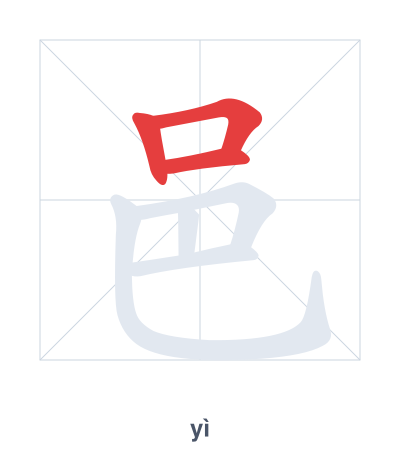
Stroke order practice for 邑 - yì

Practice Writing 邑 (yì)

Open Hanzi Writer to see the animated stroke order and practice writing 邑 with real-time feedback.

The character (yì) is written with 7 strokes. Follow the standard Chinese stroke order: top to bottom, left to right, outside before inside. The radical is one of its key components.

Practice the correct stroke order with the Hanzi Writer app to see animated stroke-by-stroke guidance with real-time feedback.

means city / town / district.

Character
Pinyinyì (yi)
Meaningcity / town / district
Strokes7
Radical
Difficulty2.8/5

The character 邑 originally depicted a walled settlement with a person kneeling inside (卩), symbolizing a populated area. The top part 口 represents the city walls or enclosure, while the bottom 卩 is a kneeling person signifying residents. Together they form the concept of a 'city' or 'town'.

💡 Memory Tip: Picture a square city wall (口) with a kneeling guard (卩) inside, watching over the town district.

chéng yì
City or town.
yì rén
fellow townsman / local people
cài yì
fief; manor

这是一个古老的城邑。

zhè shì yí gè gǔ lǎo de chéng yì

This is an ancient town.

他是这里的邑人。

tā shì zhè lǐ de yì rén

He is a local resident of this town.

这是古代的采邑。

zhè shì gǔ dài de cài yì

This is an ancient fief.

Stroke order practice for 邑 - yì

Practice Writing 邑 (yì)

Open Hanzi Writer to see the animated stroke order and practice writing 邑 with real-time feedback.

✨ Animated stroke order · Handwriting recognition · HSK-graded practice · Free to use

Frequently Asked Questions about 邑

邑 is composed of a top part 口 (mouth or enclosure) and a bottom part 巳 (a kneeling person), which together suggest a person kneeling within a walled area. This pictographic combination represents a city or town, as ancient towns were often walled settlements.

Characters with Radical 邑

Other 7-Stroke Characters