龥 (yù) means "To appeal or implore" in Chinese. It has 26 strokes with the radical 龠.
Rated 3.8/5 in difficulty (challenging).
Appears in 3+ common words including 呼龥 (hū yù), 龥求 (yù qiú), 哀龥 (āi yù).
Due to its 26 strokes, Hanzi Writer's error detection shows 龥 requires focused practice — most learners need 10+ attempts for consistent accuracy.
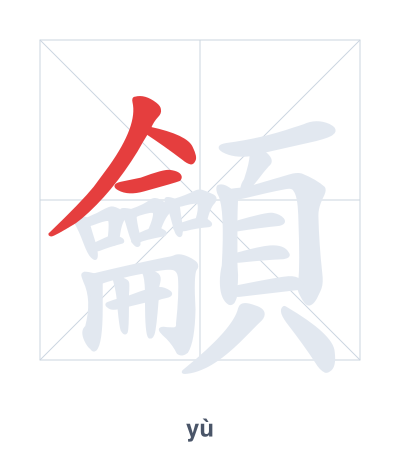
Open Hanzi Writer to see the animated stroke order and practice writing 龥 with real-time feedback.
The character 龥 (yù) is written with 26 strokes. Follow the standard Chinese stroke order: top to bottom, left to right, outside before inside. The radical 龠 is one of its key components.
Practice the correct stroke order with the Hanzi Writer app to see animated stroke-by-stroke guidance with real-time feedback.
龥 means To appeal or implore.
| Character | 龥 |
| Pinyin | yù (yu) |
| Meaning | To appeal or implore |
| Strokes | 26 |
| Radical | 龠 |
| Difficulty | 3.8/5 |
龥 combines 龠 (a reed pipe, representing sound) and 頁 (head, representing a person). Together they depict someone using a pipe to produce a loud call, symbolizing an earnest appeal or imploration.
💡 Memory Tip: Picture a head (頁) desperately blowing a reed pipe (龠) to appeal for help.
他向社会发出呼龥。
tā xiàng shè huì fā chū hū yù
He made an appeal to society.
灾民在龥求帮助。
zāi mín zài yù qiú bāng zhù
The disaster victims are imploring for help.
他的哀龥令人同情。
tā de āi yù lìng rén tóng qíng
His piteous cries evoke sympathy.
Open Hanzi Writer to see the animated stroke order and practice writing 龥 with real-time feedback.
✨ Animated stroke order · Handwriting recognition · HSK-graded practice · Free to use
龥 is composed of the radical 龠 (a flute, representing music or harmony) on the left, and 頁 (head or page) on the right. Together, they suggest lifting one's head to make a musical plea, reflecting the idea of appealing or imploring with emotion.