籀 (zhòu) Çince'de «Zhou yazısı (antik bir hat sanatı)» anlamına gelir. 19 vuruşu vardır, radikali 竹.
Zorluk 4.2/5 (ileri).
3+ yaygın kelimede görünür, 籀文 (zhòu wén), 大籀 (dà zhòu), 籀书 (zhòu shū) dahil.
19 vuruşu olması nedeniyle Hanzi Writer'ın hata algılaması 籀'nin odaklanmış pratik gerektirdiğini gösterir — çoğu öğrenci tutarlı doğruluk için 10+ denemeye ihtiyaç duyar.
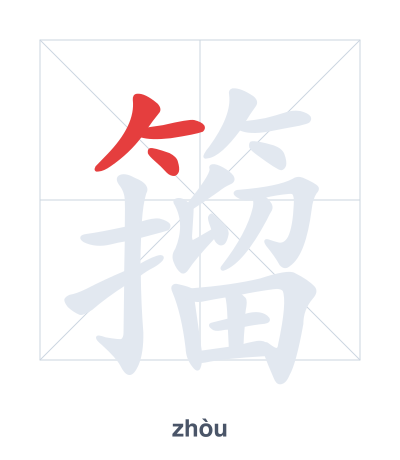
Animasyonlu vuruş sırasını görmek ve 籀 yazma pratiğini gerçek zamanlı geri bildirimle yapmak için Hanzi Writer'ı açın.
籀 (zhòu) karakteri 19 vuruş ile yazılır. Standart Çince vuruş sırasını izleyin: yukarıdan aşağıya, soldan sağa, dıştan içe. 竹 radikali ana bileşenlerinden biridir.
Hanzi Writer uygulamasıyla doğru vuruş sırasını pratik edin ve animasyonlu adım adım rehberlik ile gerçek zamanlı geri bildirim görün.
籀, Zhou yazısı (antik bir hat sanatı) anlamına gelir.
籀, pronounced zhòu, is a complex character that historically refers to a style of ancient Chinese calligraphy known as Zhou script, used during the Zhou dynasty. The character is composed of the radical 竹 (zhú, meaning 'bamboo') on top, indicating its connection to writing materials (bamboo slips), and the phonetic component 溜 (liū, meaning 'to slide') below, which provides the sound. The combination suggests the act of writing or carving on bamboo, linking to its meaning of ancient script.
💡 Hafıza İpucu: Imagine a person sliding down a bamboo pole while carving ancient characters into it, leaving behind the intricate strokes of the Zhou script.
籀文是一种古老的汉字字体。
zhòu wén shì yī zhǒng gǔ lǎo de hàn zì zì tǐ
Zhou yazısı, eski bir Çince karakter yazı tipidir.
大籀的笔画非常复杂。
dà zhòu de bǐ huà fēi cháng fù zá
Dazhou yazısının vuruşları çok karmaşıktır.
他喜欢研究古代的籀书。
tā xǐ huān yán jiū gǔ dài de zhòu shū
Antik mühür yazılarını araştırmayı sever.
Animasyonlu vuruş sırasını görmek ve 籀 yazma pratiğini gerçek zamanlı geri bildirimle yapmak için Hanzi Writer'ı açın.
✨ Animasyonlu vuruş sırası · El yazısı tanıma · HSK seviyesine göre pratik · Ücretsiz
籀 is a phono-semantic compound. The top part, 竹, is the radical and represents bamboo, which was used for writing in ancient China. The bottom part, 溜, provides the pronunciation (zhòu) and visually suggests sliding or flowing, perhaps symbolizing the smooth strokes of the script. Together, they evoke the idea of writing on bamboo slips, which is how Zhou script was typically recorded.